Corporate Employee Transport Services in Mumbai (Complete Guide)
Ask any Mumbai office admin what causes the most avoidable morning calls, and commute delays will be near the top. One bus stuck near Sion or one driver unsure about a Goregaon pickup lane can derail the first hour.
That is why many companies now treat employee transport services mumbai as a planned business function, not a last-minute vehicle booking. A steady commute system protects time, keeps employees calmer, and gives HR or facility teams fewer fires to put out. It also helps companies hire across suburbs, highways, and business districts.
Call / WhatsApp: 8070707078 (Available 24×7)
What employee transport services mumbai Actually Means
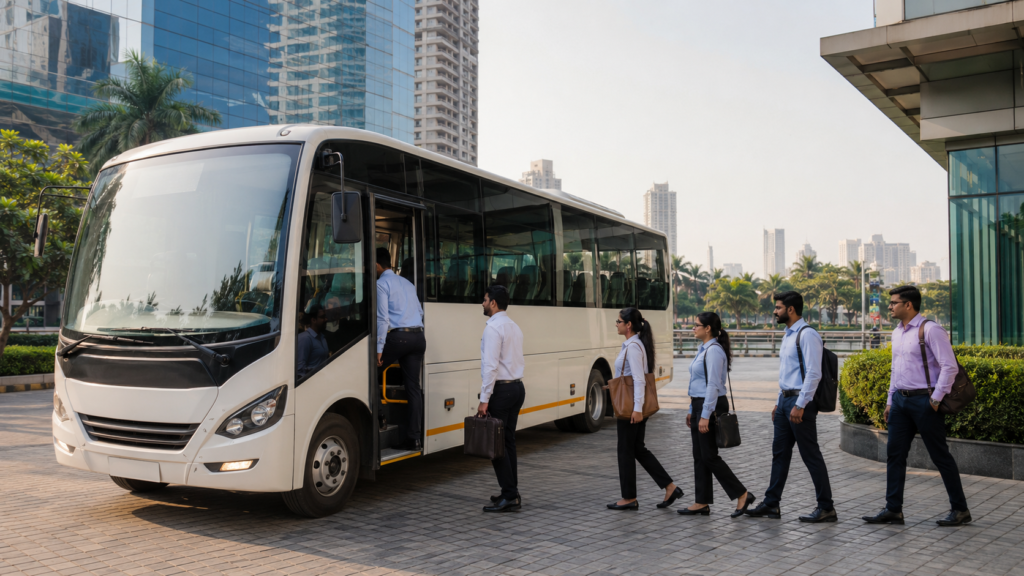
At its simplest, employee transport services mumbai covers regular travel arranged by a company for its staff. The setup changes from one workplace to another. A BKC office may need fixed morning and evening buses from Borivali, Thane, and Navi Mumbai. A factory may need shift-wise pickups. A sales team may need vehicles only for meetings, events, or training days.
The better providers do more than send a bus. They help with route planning, vehicle size, reporting points, driver coordination, and schedule changes. Some also handle outstation team trips, airport movement, conference transfers, and late-night drops.
Sushma Travels bus rental, for example, lists corporate buses for daily employee commutes, events, and outstation travel, with 17 to 49 seater options, AC and non-AC vehicles, and luxury coaches.
Why Mumbai Offices Need a Proper Commute Plan
Mumbai commuting is not only about distance. A 12-kilometre route can take longer than expected if it passes a crowded junction or a railway station approach road. During rain, even a good route can slow down sharply.
A planned model for employee transport services mumbai gives everyone a reference point. Employees know where the bus stops. Admin teams know which vehicle is on which route. Drivers know the sequence. Managers can spot delays before they become attendance issues.
For companies hiring across suburbs, corporate transport mumbai also improves accessibility. A commute option can make an office in Andheri, Powai, Lower Parel, or Navi Mumbai feel less difficult for employees who live far away.
Choosing the Right Vehicle for the Route
Vehicle choice should come after route mapping, not before it. A large bus may look economical on paper, but it can be slow on narrow internal roads. A smaller bus may move faster, but it may not work if the team grows quickly.
For smaller teams, don’t book a large bus just for the sake of it. A Minibus on Rent in Mumbai works well for training visits, short office transfers, and local team movement. For annual events, conferences, or longer routes, a Luxury Bus on Rent in Mumbai is a better fit because employees get more space during the ride.
For daily office movement, comfort still matters. Employees may spend 45 minutes to two hours in transit. Clean seats, working AC where promised, enough legroom, safe entry steps, and clear luggage space make the ride less tiring.
For office bus rental mumbai, ask the provider which vehicle fits each route rather than asking only for the cheapest rate. Different roads, lanes, and business parks may need different planning.
Call / WhatsApp: 8070707078 (Available 24×7)
Route Design: Where Most Problems Begin
A common mistake is trying to please every employee with a pickup close to home. It sounds generous, but it can add too many turns, delays, and missed calls. In Mumbai, fixed cluster points usually work better because people can reach a known stop and the bus keeps moving.
Good route design starts with employee pin codes, shift timings, reporting time, and real traffic knowledge. A Thane-to-Powai route needs different thinking from a Borivali-to-BKC route. Even within the same suburb, a stop near a station may be easier to identify than one inside a crowded lane.
The real test of employee transport services mumbai is not the first day of operation. It is the third week, when small issues start repeating. That is when route discipline, driver familiarity, and admin follow-up show their value.
Safety Should Not Be Treated as a Checklist
Safety is easy to mention in a proposal and harder to manage every day. Companies should ask how drivers are verified, how often vehicles are maintained, and what happens if a vehicle breaks down during peak hours. Night drops need extra care, especially for women employees and teams working late shifts.
Useful practices include shared route contacts, driver details, emergency escalation numbers, trip logs, and sensible drop sequencing. A provider should also be clear about replacement vehicles, driver behavior standards, and response time during delays.
Do not judge staff transport solutions only by monthly cost; weak safety and repeated delays quickly become more expensive.
Planning for Shifts, Events, and Sudden Changes
Not every company runs on one login and one logout. Contact centers, hospitals, IT support teams, warehouses, and manufacturing units may need multiple shifts. Some days need extra vehicles for a client visit, town hall, training program, or annual event.
A useful transport partner should be able to adjust without turning every change into a negotiation. Share rosters early where possible, but also check how they handle urgent additions. The difference between average and dependable company bus services is often seen during messy days, not quiet ones.
What Affects the Cost
Transport pricing depends on vehicle type, distance, duty hours, fuel, tolls, parking, driver allowance, night timing, route complexity, and contract duration. A single-day event booking is calculated differently from a daily employee shuttle.
Before signing, ask what is included. Are extra kilometres billed separately? Is waiting time chargeable? Are tolls and parking included or actuals? What backup is provided if the assigned bus is unavailable?
Clear billing saves awkward conversations later and lets the company compare vendors fairly instead of choosing the lowest headline number.
Questions to Ask Before Finalizing employee transport services mumbai
Speak to the provider as if you are discussing a daily operation, not a one-time booking. Ask about fleet availability, driver training, maintenance routines, escalation process, route flexibility, and support hours.
Also ask for practical examples. How would they run a route from Mira Road to Lower Parel? What would they suggest for scattered employees in Navi Mumbai? Can they manage early morning pickups without repeated delay calls? These answers reveal whether the provider understands Mumbai travel.
A short pilot route can help. Run it for a limited group, collect feedback, check punctuality, and then expand. This avoids locking a full workforce into a weak route design.
Book Your Corporate bus rental mumbai services with us
- Call / WhatsApp: 8070707078 (Available 24×7)
- Email: book@sushmatravels.com
We are always ready to provide Best Corporate bus rental mumbai at the best price. Reach us now to know more.
Conclusion
A reliable commute plan is one of those office systems people notice most when it fails. In Mumbai, where a small delay can spread across the whole day, transport deserves proper planning, not a rushed booking call. Start with employee locations, choose vehicles that suit real roads, keep safety checks visible, and write down billing terms before the first trip begins. A good provider will not just rent a bus; they will help you think through routes, timings, backup, and daily coordination. For HR and admin teams, employee transport services mumbai can reduce repeated commute complaints and make attendance smoother. For employees, it offers something simple but valuable: a predictable way to reach work and return home without starting every day with stress, uncertainty, and too many calls from the gate, driver, manager, or waiting team on a busy morning.
Frequently Asked Questions
How do companies decide the best pickup points?
Most companies begin with employee home locations, then group nearby people around easy landmarks such as stations, junctions, or main-road stops. The best pickup points reduce walking effort without forcing the bus into narrow lanes that delay the whole route.
Are buses suitable for late-night employee drops?
Yes, but late-night travel needs stricter planning. Companies should confirm verified drivers, emergency contacts, trip tracking, proper drop sequencing, and replacement support. Women employees and smaller late-shift groups may need additional safeguards depending on location and timing.
Can a company start with one route first?
Yes. Starting with one pilot route initially is often sensible for most offices. It lets the admin team test punctuality, vehicle comfort, driver conduct, pickup discipline, and employee response before expanding across more suburbs, departments, or shifts.
What is included in employee transport services mumbai?
It usually includes route planning, scheduled pickups and drops, suitable vehicles, trained drivers, coordination support, and billing based on distance or duty hours. Some providers also support events, outstation trips, airport transfers, and employee movement across shifts.
How often should office transport routes be reviewed?
Review routes at least every quarter, or sooner if headcount, shifts, office location, or traffic patterns change. Regular feedback helps remove weak stops, reduce delays, adjust vehicle size, and keep the commute useful for employees instead of outdated.